

The 4th annual Innovations Against AMR summit, co-organised by Medilink Midlands and Cytecom, will convene experts and stakeholders from across the antimicrobial resistance landscape to share insights, showcase innovations, and foster collaboration. Covering the spectrum from cutting-edge academic research to real-world implementation, policy, and surveillance, this year’s programme offers essential discussions for anyone working in AMR or related fields.
This year, we will also explore the far-reaching impact of AMR beyond the specialist sphere—shaping policy, influencing cancer care pathways, and protecting other vulnerable patient groups.
Reasons to Attend
1. Be at the forefront of AMR innovation: Connect with leading innovators, researchers, and industry experts driving advancements in combating antimicrobial resistance. Discover the latest breakthroughs and explore potential collaborations.
2. Support SMEs and foster growth: Learn about innovative solutions developed by small and medium enterprises (SMEs) and contribute to their success. Network with like-minded individuals to create new partnerships and drive innovation.
3. Gain valuable insights and knowledge: Attend engaging presentations and discussions on the latest trends and challenges in the field of AMR. Expand your understanding of the issue and stay ahead of the curve.
4. Network with key stakeholders: Connect with representatives from organisations like Medilink Midlands, WMHTIA, Cytecom, University of Warwick and Microbiology Society. Build relationships and explore potential partnerships.
5. Contribute to a global cause: Join the fight against antimicrobial resistance by attending this event. Be part of a community dedicated to raising awareness, promoting best practices, and driving positive change.

Agenda
9:30am Arrival & registration
10am Introduction followed by Opening Remarks from Dame Sally Davies
10:15am Session 1: Institute to Impact – Research to Commercialisation
– Chris Dowson – Warwick AMR Facilities
– Kim Hardie – National Biofilms Innovation Centre
11am Comfort break, poster boards & networking
11:30am Session 2: Diagnostics Panel Discussion
Panelists:
- Phil Packer -Innovate UK
- Bob Roopra – Roopra Medical
- Lucy Lehane – BIVDA and Lehane Consulting
- William Finch – Oxford Vacmedix
12:30pm Lunch
1:30pm Session 3: Policy Workshop – Delivered by Microbiology Society
(Will Thompson, Policy and Engagement Officer)
The Microbiology Society is leading the way in tackling AMR through its ambitious and wide-reaching Knocking Out AMR project. This initiative promotes innovative solutions to AMR by fostering cross-sector collaboration and driving policy action. The session will open with a presentation introducing AMR policy and regulation tailored for SMEs, followed by a panel discussion featuring experts working across therapeutics, diagnostics, vaccines and regulation.
2:30pm Session 4: AMR and Cancer/Environmental
– David Eyre – Oxford Biomedical Research Centre
3:30pm Networking and posters to end
4:30pm Depart
If anyone would like to register their interest in presenting a poster, please click the link: Innovations Against AMR – Friday 21st November 2025
*Please register your interest by 5pm on 27th October.
Speaker Information
 Professor Kim Hardie FRSB
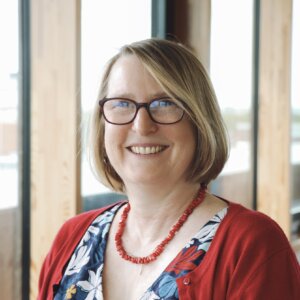
Professor Kim Hardie FRSB, Professor in Bacterial Pathogenesis is Co-director of the National Biofilms Innovation Centre (NBIC) at the University of Nottingham and Chair of the Publishing Panel at the Microbiology Society. Kim’s international career investigating strategies that could circumvent the rising issue of antimicrobial resistance (AMR) includes study at the Universities of Leicester and Cambridge. Kim’s research group investigates how bacteria form coordinated communities (biofilms) since these are notoriously hard to treat and have life-changing consequences. State-of-the-art multidisciplinary approaches are combined with realistic polymicrobial infection models to discover novel antimicrobials, more effective combination therapies, or diagnostic biomarkers.
 Professor Chris Dowson
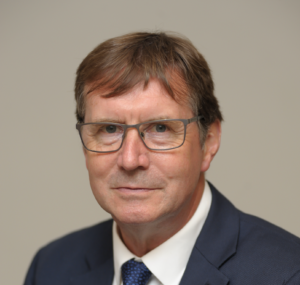
Professor Chris Dowson has, for many years, examined the emergence and evolution of antibiotic resistance across a wide range of bacteria. His recent focus has been to better understand how penicillin targets bacteria. He currently holds a personal chair at Warwick University and is a past member of the Medical Research Council Infections and Immunity Board. He has established the Sir Howard Dalton Centre HDC for Translational Mechanistic Enzymology and is co-director of this and the Warwick Antimicrobial Interdisciplinary Centre WAMIC. He enabled the location of the Medicines Discovery Catapult MDC AMR Laboratory facility at Warwick and has been involved with philanthropic research fundraising regionally across Warwickshire for the past 20 years.
Bob Roopra MBA FCIM
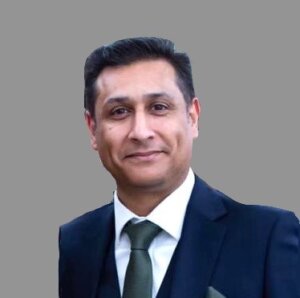
Bob has over 25 years of experience in the IVD and medical devices industry, with a wealth of expertise in executive leadership, start-ups, scale-ups, commercialisation, consulting, advisory, strategic planning, and implementation. His specialisations encompass IVD diagnostics, medical devices, point-of-care solutions, informatics, and disruptive technologies.
Bob’s broad experience across diverse sizes of organisation sizes has provided him with deep insights into strategic direction setting and commercial planning. His comprehensive knowledge of the IVD and medical device sectors, combined with his skill in crafting and executing business strategies, ensures outcomes that balance clinical, financial, and operational priorities for sustained commercial enterprise success.
 Phil Packer
Phil Packer is the Innovation Lead on AMR and Vaccines at Innovate UK, developing & delivering funding calls, supporting workshops and strategy. This includes overseeing projects funded through IUK funding mechanisms such as the Biomedical Catalyst and SMART programme, and the IUK AMR Global Programme.
Phil is the IUK Responsible Officer for AMR initiative PACE (Pathways to Antimicrobial Clinical Efficacy), a co-creation with LifeArc and the Medicines Discovery Catapult, a UK, £30M, nationally coordinated programme that supports both academic and SME translation, integrated with the UK science base and the international community to contribute innovative and precision therapeutics and associated diagnostics to the global infectious disease pipeline in areas of unmet patient need (especially under-served communities).
Phil is also the IUK lead for the delivery of a £40M DHSC, UK Vaccine Network programme delivering vaccine with outbreak potential in Low- and Middle-Income Countries.
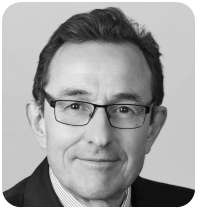 William Finch
- Biochemistry, University of Oxford
- >34 years experience in biotech sector with a focus on leading SMEs
- Wide experience with Dx industry
- Amersham, DSL, Beckman Coulter
- CEO, R&D Systems Europe
- CEO ,Oxford Bio-Innovation
- Scientific Committee, UK ACB
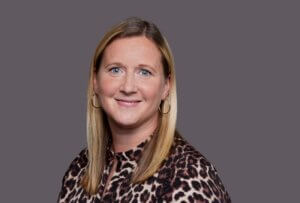 Lucy Lehane
Lucy is an independent Medical Diagnostics Consultant who began her career in the National Health Service as a Clinical Scientist. It was here that she gained first hand insights into the importance of diagnostic testing in improving health and disease management, and enhancing patient experiences. Fast forward nearly 25 years, and Lucy has spent her career in the commercial world of diagnostic testing holding leadership roles in Product Management, Technical Marketing and Medical Affairs for several leading diagnostic companies.
In 2023, Lucy established her own consultancy business – Lehane Consulting Ltd. providing medical diagnostics expertise to guide businesses to bring their diagnostic products to market. Lucy endeavours to apply her 25 years of experience in the IVD industry to provide expert advice for product development, market understanding, devising clinical studies and communications to help bring products to life.
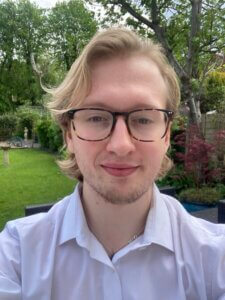
Will Thompson
Will studied Biotechnology at the University of Nottingham, followed by a Master’s in Science and Technology Policy at the University of Sussex. As Policy and Engagement Officer at the Microbiology Society, Will has played a key role in shaping the Society’s policy outputs and stakeholder engagement around AMR. This includes a policy briefing on AMR in wastewater and developing AMR international engagement activities with the UK’s Science and Technology Network (STN).
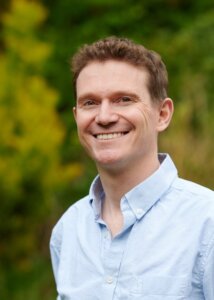
Professor David Eyre
David Eyre is a Professor of Infectious Diseases at the University of Oxford and a Consultant in Infection at Oxford University Hospitals. His research uses routinely collected data to understand who gets different infections and why, and how best to prevent, treat and monitor these infections. He also focuses on developing artificial intelligence tools to help diagnose and treat hospital patients, and to help operational delivery of healthcare. His other research interests include the use of whole-genome sequencing as a tool for understanding the epidemiology and transmission of pathogens and how it can best be used in infection prevention and control.
To read more about Medilink Midlands’ role within the WMHTIA project, click here.
For more information on the wider project, click here to visit the WMHTIA website.
This event forms part of the West Midlands Health Tech Innovation Accelerator (WMHTIA) event series. Medilink Midlands are one of a consortium of delivery partners for the WMHTIA, a project funded by the Department for Science, Innovation and Technology, Innovate UK and West Midlands Combined Authority (part of City Regions).